
The problem
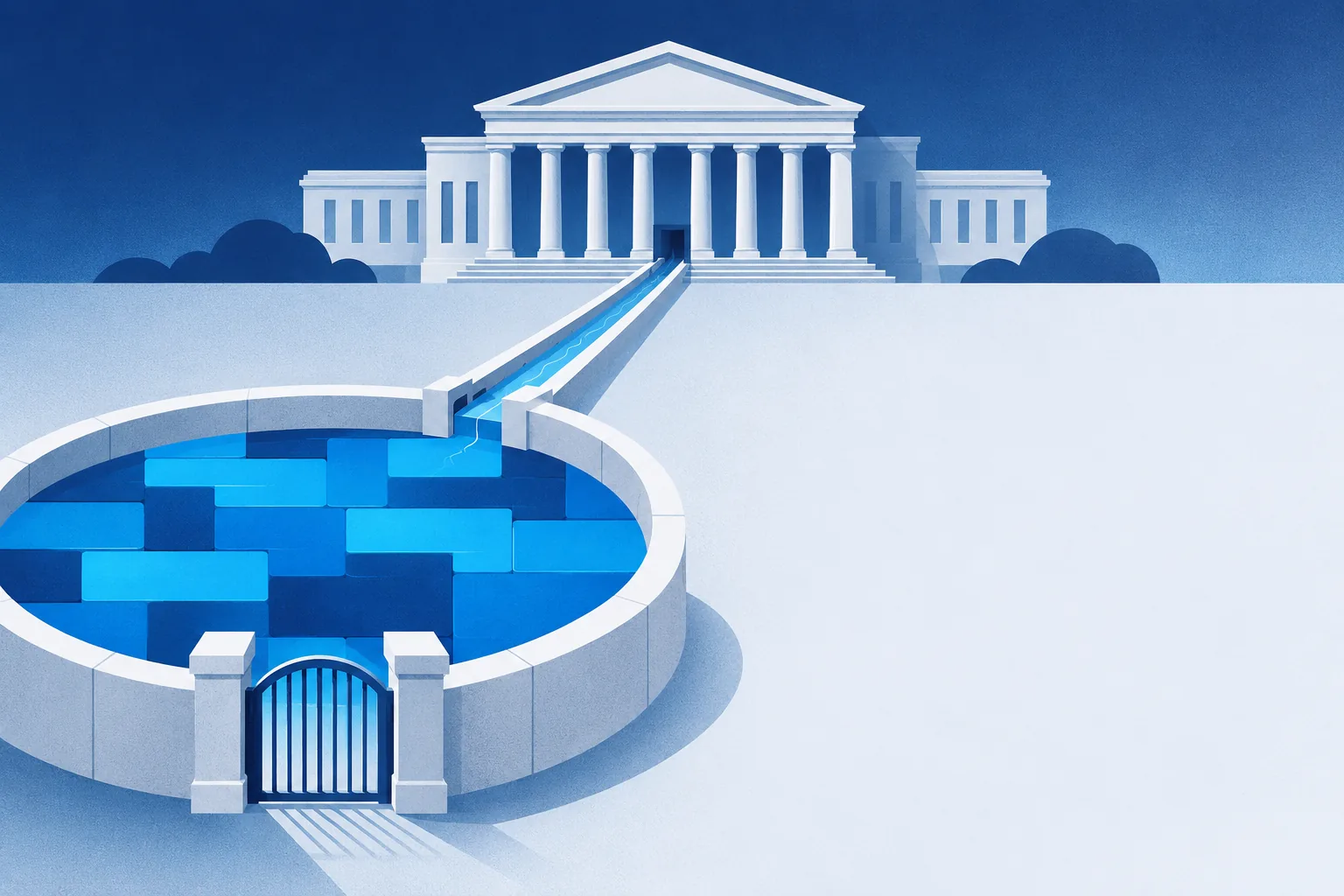
Terms agreed in a document are re-keyed by several parties into registers, checks and servicing systems.
Section
Structuring
The instrument classes DAMREV structures, and the four situations that bring most clients here.
Not sure which page answers your question? A structuring review starts with that conversation.
Start a Structuring ReviewSection
Services
The ladder, from a paid first look to a programme DAMREV operates for you.
Not sure which page answers your question? A structuring review starts with that conversation.
Start a Structuring ReviewSection
Platform
Eight capabilities and twenty named engines. DAMREV runs its own instruments on it.
Not sure which page answers your question? A structuring review starts with that conversation.
Start a Structuring ReviewSection
Tokenized IPO
A tokenized listing is a listing first. This section is about whether yours is ready.
Not sure which page answers your question? A structuring review starts with that conversation.
Start a Structuring ReviewSection
Compliance
Written to be read by a regulator, a counterparty or an auditor without a call first.
The Americas & the Caribbean
Europe
Not sure which page answers your question? A structuring review starts with that conversation.
Start a Structuring ReviewSection
Insights
The published record. Papers, positions and the vocabulary, all dated.
Not sure which page answers your question? A structuring review starts with that conversation.
Start a Structuring ReviewNot sure which page answers your question? A structuring review starts with that conversation.
Start a Structuring ReviewCompany
DAMREV exists because structured finance is sound but costly to operate. Its thesis is structured finance, now programmable: settle the transaction with counsel, encode the agreed terms into the instrument, and operate it for life. Twenty engines, developed over three years, carry that work, and DAMREV Labs, LLC runs it from Wyoming.
The problem
The discipline is sound; the operation around it is expensive. A transfer restriction, a waterfall or a release schedule is agreed once in a document, then copied by several parties into their own systems. Every copy is a place where the record and the terms can drift apart.
The story in brief
In five steps. The story starts with a discipline that works, finds the cost in how it is operated, and ends with a platform that DAMREV runs on its own operations before it asks a client to rely on it.
Terms agreed in a document are re-keyed by several parties into registers, checks and servicing systems.
Structured finance, now programmable: the terms travel with the instrument and are enforced from issuance.
Structure first with counsel, encode once, then operate the instrument for its whole life.
Twenty engines, each performing one defined function, usable as a whole stack or one by one.
Stratum runs DAMREV's own operations as tenant zero, and each version of the DAMREV Standard is proved there first.
The thesis
It means the agreed terms of a transaction are carried into the operating instrument and enforced from then on. Rights, eligibility, transfer controls and servicing logic are encoded once, so the legal documents and the operating record describe the same transaction for the life of the instrument.
DAMREV brings structured finance on-chain and makes it programmable through tokenization. The platform is a configurable system that each client shapes within DAMREV's tokenization framework, not a fixed product used the same way by everyone.
A token that faithfully enforces a badly structured deal reaches the wrong outcome faster. DAMREV therefore treats tokenization as the last step of structuring: the asset, the claim, the vehicle, the ranking and the control framework are settled with counsel before anything is encoded, and the regulated functions stay with the parties appointed to hold them.
The platform
Because clients need different parts of the same machinery. Each of DAMREV's twenty engines performs one defined function, so a client can run a whole programme on DAMREV or connect only the engines it needs into its own architecture and keep its own permissions, systems and operating boundaries.
A single product would force every client into one shape. A fund administrator that already keeps its own register needs transfer enforcement and credentials, not a second register. A company preparing to list needs the whole sequence.
A fifth family, governance and intelligence, covers governance earned by staking $DREV, the valuation framework, and agentic artificial intelligence that works inside defined roles and approval paths.
The market
Because institutions are already issuing on public chains. Tokenized real-world assets, excluding stablecoins, were reported at about 26.4 billion US dollars in March 2026, against about 6.6 billion a year earlier, with private credit and institutional alternative funds among the classes above one billion US dollars each1.
The growth came mainly from issuance rather than trading, with typical transfers of around ten million US dollars3. A projection by Boston Consulting Group for Ripple expects adoption in phases, from money market funds and bonds toward private credit and structured finance2. Structured finance is the later, harder phase, and it is the one DAMREV was built for.
Why Wyoming
DAMREV Labs, LLC is a Wyoming limited liability company, published from Wyoming, and its website terms are governed by Wyoming law. Wyoming is a state whose own public institutions work with digital assets: on 19 August 2025 it issued the Frontier Stable Token through the Wyoming Stable Token Commission4.
Common questions
Short answers to the questions people ask most about this topic.
Because a token that faithfully enforces a badly structured deal reaches the wrong outcome faster. The asset, the claim, the vehicle, the ranking and the control framework are settled with counsel before anything is encoded.
Yes. A client can run a whole programme on DAMREV, or connect only the engines it needs into its own architecture and keep its own permissions, systems and operating boundaries.
Yes. Stratum, the operating core, serves as tenant zero for DAMREV's own operations, and each dated version of the DAMREV Standard is proved there before any client is asked to adopt it.
No. The Frontier Stable Token is the State of Wyoming's instrument. DAMREV has no role in it, and it confers no standing on DAMREV.
Where next
The pages below pick up where this one ends. Start with the one closest to where your asset or programme stands today.
Last updated:
Insights
Since 17 September 2026 a tokenized securities venue may run automated liquidity pools in tokenized listed stock without registering as an exchange, on conditions.

The GENIUS Act binds payment stablecoin issuers from 18 January 2027, not the firms that hold or settle in stablecoins. Service providers follow in 2028.
The CLARITY Act stalled on a 49 to 50 vote, so tokenized securities stay with the Securities and Exchange Commission, as before.

Guernsey's guidance of 24 July 2026 lets a fund or issuer record and transfer its investments as tokens, under the regimes already applying to it.
Tell us what you want to tokenize.
We will show you how DAMREV can run it.