



The smart contract assessor
It shares common ownership with DAMREV, and DAMREV is its first client. It is a separate entity that only assesses and attests; Sentinel enforces; the relationship is disclosed as related-party.
Section
Structuring
The instrument classes DAMREV structures, and the four situations that bring most clients here.
Not sure which page answers your question? A structuring review starts with that conversation.
Start a Structuring ReviewSection
Services
The ladder, from a paid first look to a programme DAMREV operates for you.
Not sure which page answers your question? A structuring review starts with that conversation.
Start a Structuring ReviewSection
Platform
Eight capabilities and twenty named engines. DAMREV runs its own instruments on it.
Not sure which page answers your question? A structuring review starts with that conversation.
Start a Structuring ReviewSection
Tokenized IPO
A tokenized listing is a listing first. This section is about whether yours is ready.
Not sure which page answers your question? A structuring review starts with that conversation.
Start a Structuring ReviewSection
Compliance
Written to be read by a regulator, a counterparty or an auditor without a call first.
The Americas & the Caribbean
Europe
Not sure which page answers your question? A structuring review starts with that conversation.
Start a Structuring ReviewSection
Insights
The published record. Papers, positions and the vocabulary, all dated.
Not sure which page answers your question? A structuring review starts with that conversation.
Start a Structuring ReviewNot sure which page answers your question? A structuring review starts with that conversation.
Start a Structuring ReviewTrust centre
DAMREV names the three relationships in which its interests could diverge from a client's, and handles each by keeping the role in a separate entity or engine with stated limits. A smart contract assessor is a related-party validator, DAMREV Capital Partners is the separate issuer and general partner, and DAMREV has its own token and treasury.
The control
By separation and disclosure. The control is stated below in the four terms a due-diligence questionnaire uses, with the facts behind the issuer and the token.
The structure
So that the firm that builds and operates the software is never also the party that issues the instrument or validates the code. Each layer below is a separate entity or engine with its own limits.
The relationships
In three places, each disclosed rather than denied. Each is set out below with why it could conflict and how it is handled.
It shares common ownership with DAMREV, and DAMREV is its first client. It is a separate entity that only assesses and attests; Sentinel enforces; the relationship is disclosed as related-party.
It can act as issuer and general partner within the same group as the software company. It is a separate legal entity, incorporated in Mauritius, with its own governance and obligations.
$DREV is DAMREV's proposed primary token, and Reserve manages DAMREV's own treasury. Reserve manages DAMREV's value, not customer funds. The site makes no price, return or listing statement about $DREV.
The limits
DAMREV Labs, LLC does not issue securities, act as general partner, manage funds or give investment advice. It is not a party to any transaction, holds no client assets, effects no trades and introduces no parties to one another. Those limits are what keep the software company clear of the issuer's interests.
The roles
Each keeps its own role. The firm that builds and operates the software is never also the party that issues the instrument or validates the code.
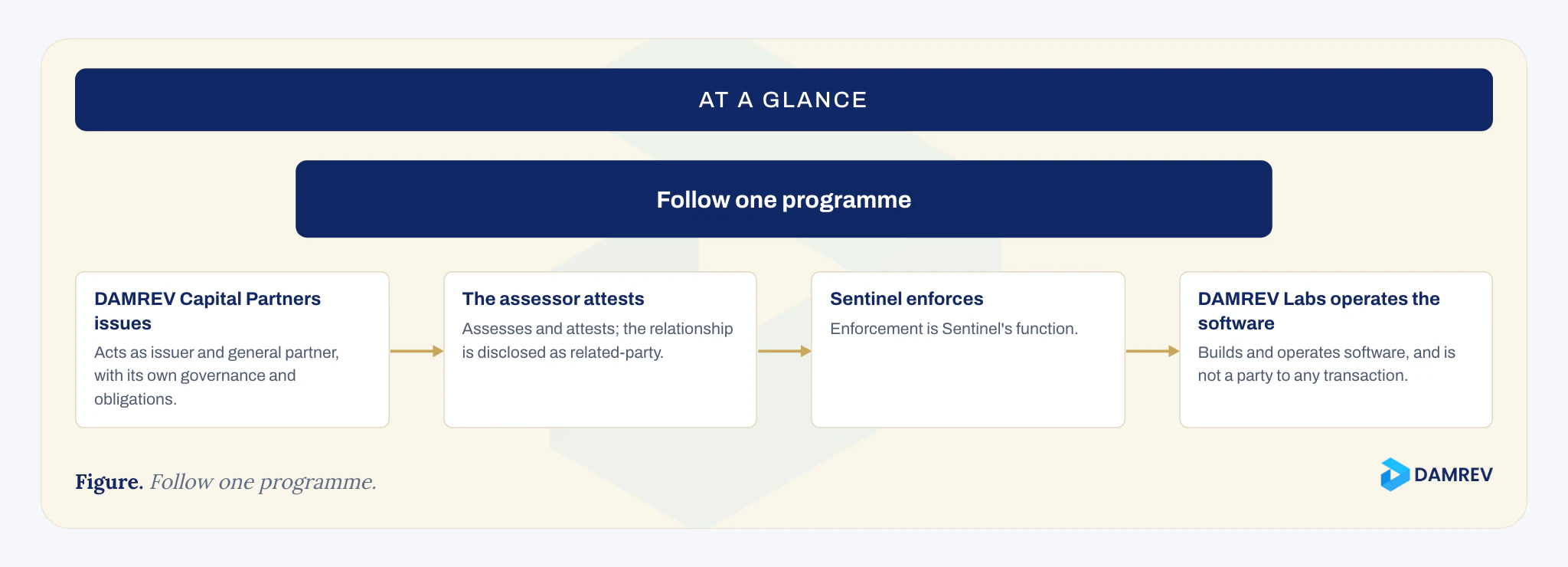
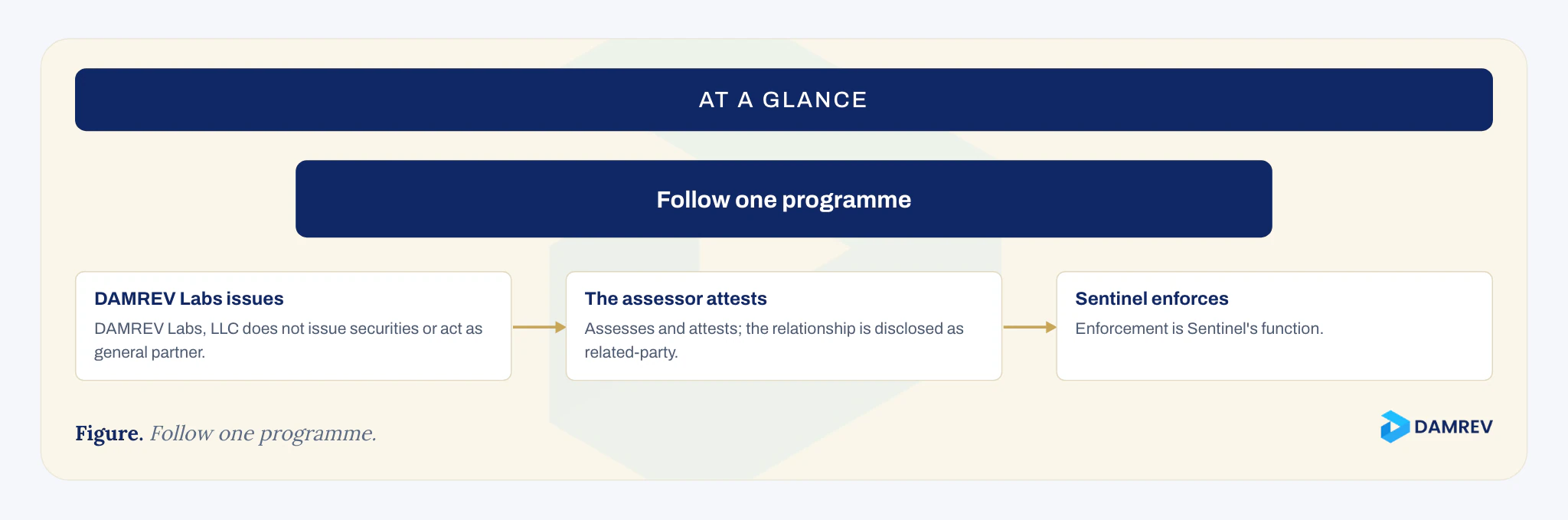
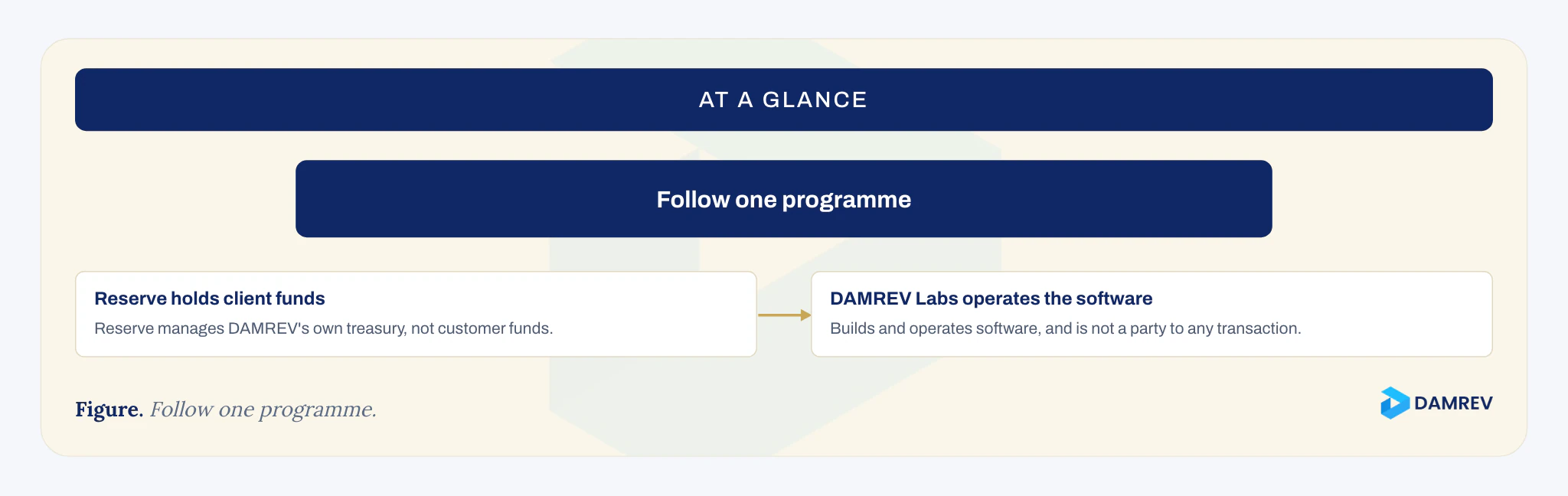
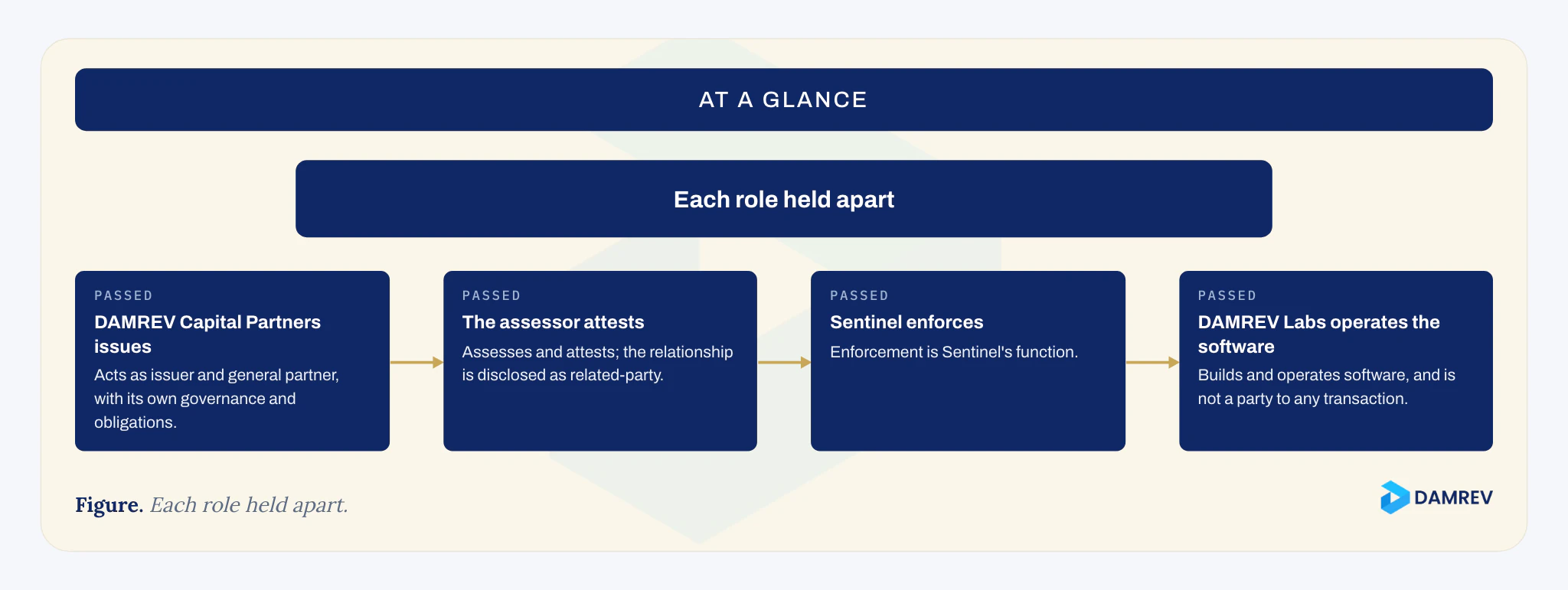
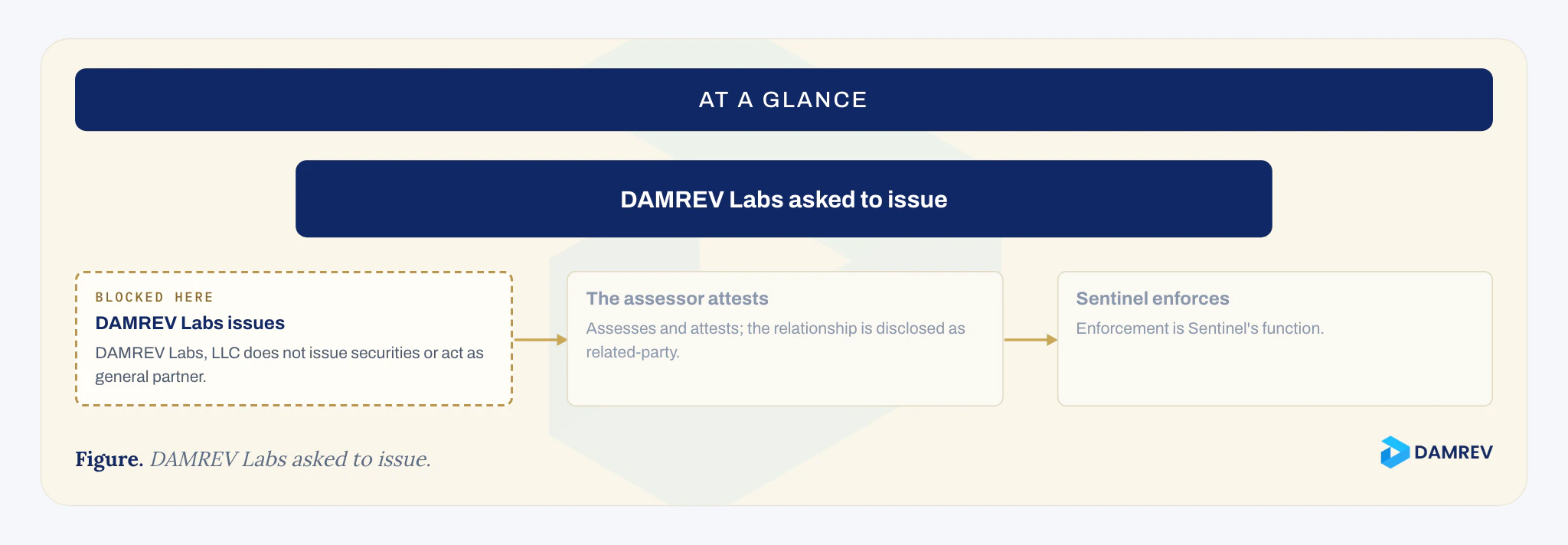
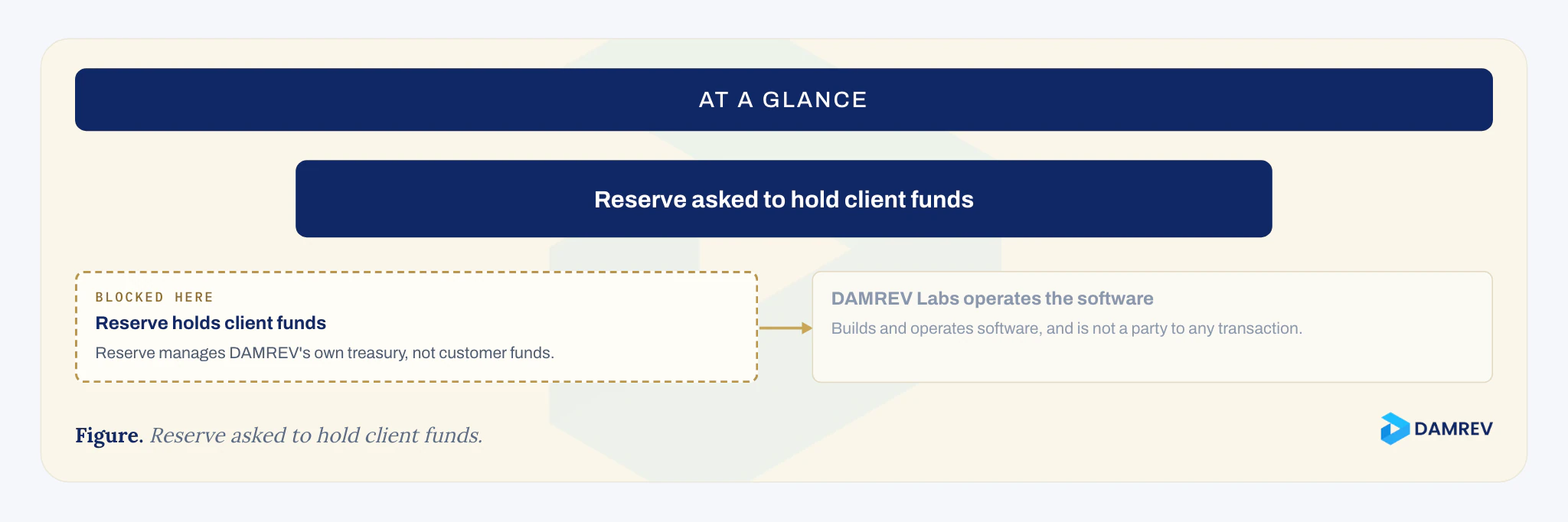
Choose a case and follow one programme through the roles.
Evidence
Enough for a reader to see which entity acted in which role on a programme.
01
02
03
04
On request
Ask through the contact page, naming the programme where one applies.
Common questions
Short answers to the questions people ask most about this topic.
It is a separate legal entity, incorporated in Mauritius, that can act as issuer and general partner. The two companies have distinct permissions, governance and obligations.
Reserve manages DAMREV's own treasury, not customer funds, and it is non-custodial with respect to user funds. DAMREV holds no client assets.
$DREV is DAMREV's proposed primary token, and governance is designed to be earned by staking it. It has not been minted, issued, offered or sold. It is not a client's instrument, and the site makes no statement of its price, return or listing.
Because the separation of assessor and enforcer is kept in function: a smart contract assessor only assesses and attests, and Sentinel only enforces. The common ownership is disclosed so a reader can weigh it.
Where next
The pages below pick up where this one ends. Start with the one closest to where your asset or programme stands today.
Last updated:
Insights

Since 17 September 2026 a tokenized securities venue may run automated liquidity pools in tokenized listed stock without registering as an exchange, on conditions.

The GENIUS Act binds payment stablecoin issuers from 18 January 2027, not the firms that hold or settle in stablecoins. Service providers follow in 2028.

The CLARITY Act stalled on a 49 to 50 vote, so tokenized securities stay with the Securities and Exchange Commission, as before.

Guernsey's guidance of 24 July 2026 lets a fund or issuer record and transfer its investments as tokens, under the regimes already applying to it.
Tell us what you want to tokenize.
We will show you how DAMREV can run it.
