



Inputs captured
The information a decision will rest on is attached, as it stands at the time.
Section
Structuring
The instrument classes DAMREV structures, and the four situations that bring most clients here.
Not sure which page answers your question? A structuring review starts with that conversation.
Start a Structuring ReviewSection
Services
The ladder, from a paid first look to a programme DAMREV operates for you.
Not sure which page answers your question? A structuring review starts with that conversation.
Start a Structuring ReviewSection
Platform
Eight capabilities and twenty named engines. DAMREV runs its own instruments on it.
Not sure which page answers your question? A structuring review starts with that conversation.
Start a Structuring ReviewSection
Tokenized IPO
A tokenized listing is a listing first. This section is about whether yours is ready.
Not sure which page answers your question? A structuring review starts with that conversation.
Start a Structuring ReviewSection
Compliance
Written to be read by a regulator, a counterparty or an auditor without a call first.
The Americas & the Caribbean
Europe
Not sure which page answers your question? A structuring review starts with that conversation.
Start a Structuring ReviewSection
Insights
The published record. Papers, positions and the vocabulary, all dated.
Not sure which page answers your question? A structuring review starts with that conversation.
Start a Structuring ReviewNot sure which page answers your question? A structuring review starts with that conversation.
Start a Structuring ReviewTrust centre
DAMREV keeps every decision, input, encoded rule and approval attached to one programme record, so any event can be traced to the authority that allowed it. An auditor reads one record instead of assembling several parties' files. Access follows the roles held in Stratum, and personal data on the record is handled under the privacy policy.
The problem
Because its history is spread across the issuer, the administrator, the transfer agent and counsel, each keeping its own files. Reconciling them is a project. A single record that holds the decisions beside their effects turns it into a reading.
How it works
Each step of a decision is attached to the record, from the inputs to the effect on the ledger. The sequence below follows one decision through.
The information a decision will rest on is attached, as it stands at the time.
An assessor drafts the assessment, and is named.
A separate approver signs, and a reviewer is added where the decision requires one.
Any rule that results is encoded, with the date from which it applies.
Sentinel applies the rule at each transfer, and the outcome settles on the ledger.
What this page does not set out
Which parties may read which parts of a programme record is set programme by programme and is not listed here. Ask for the access arrangements of a named programme through the contact page.
Tracing an event
Any event can be traced to the authority that allowed it. An auditor reads one record instead of assembling several parties' files.
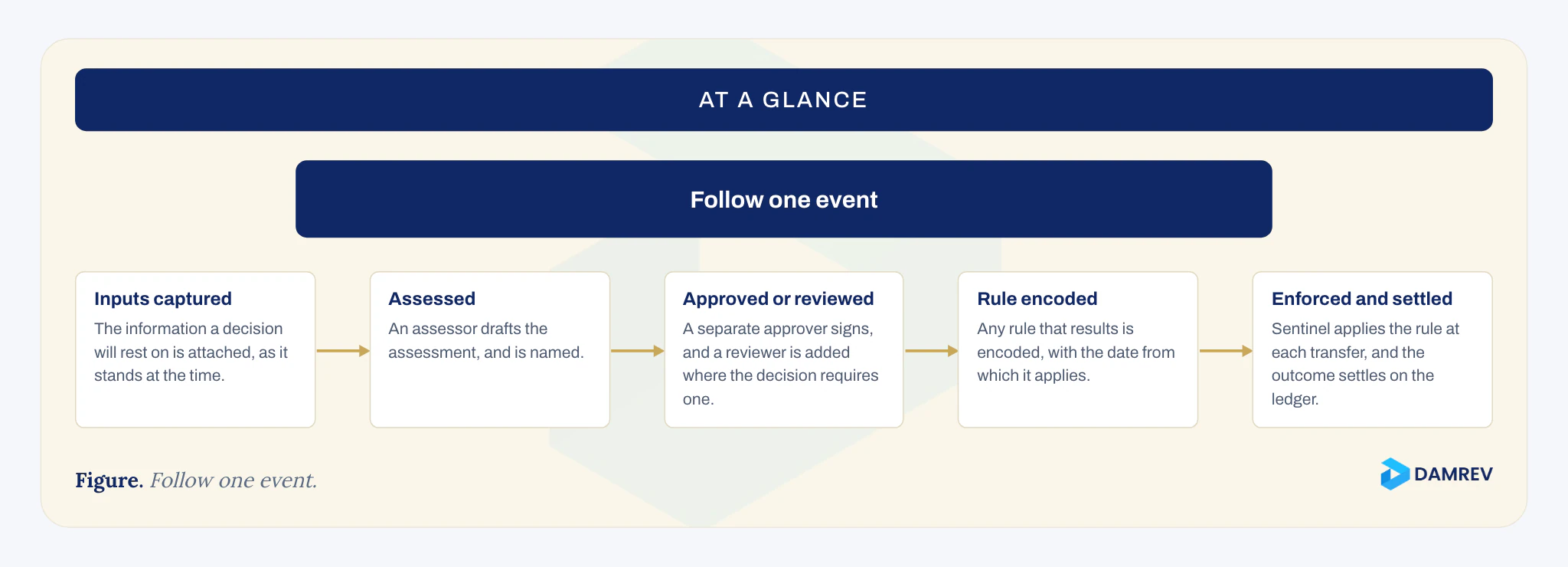
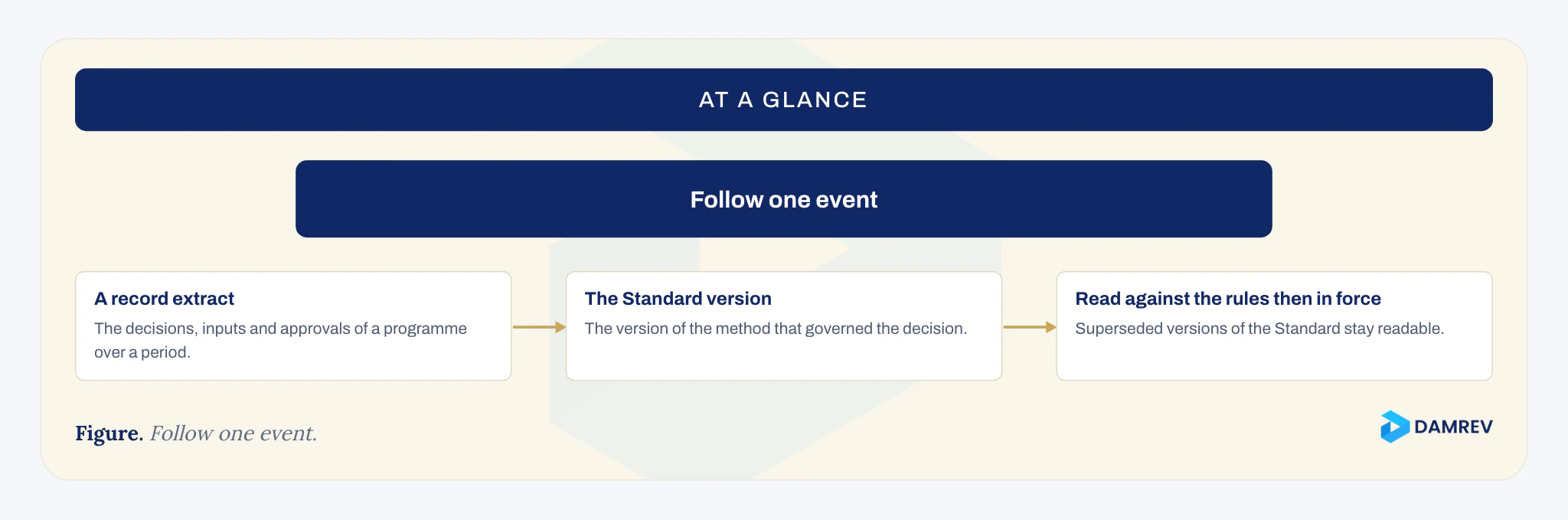
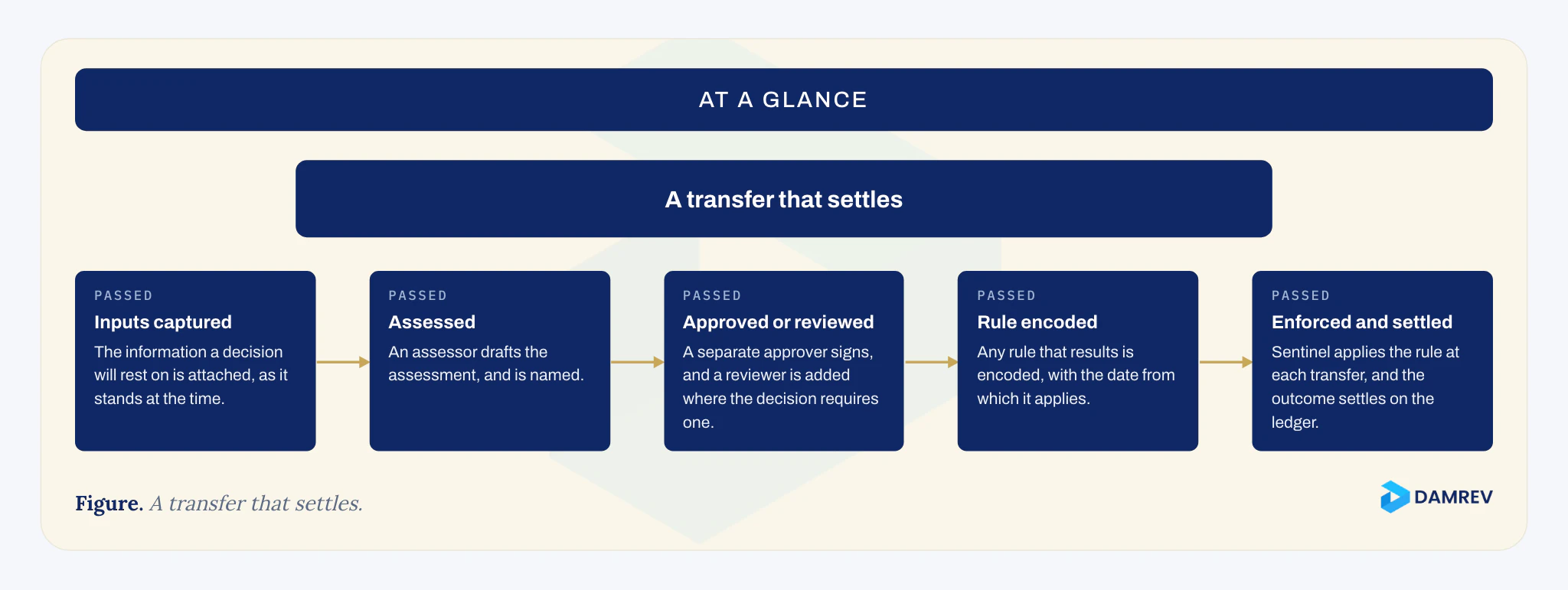
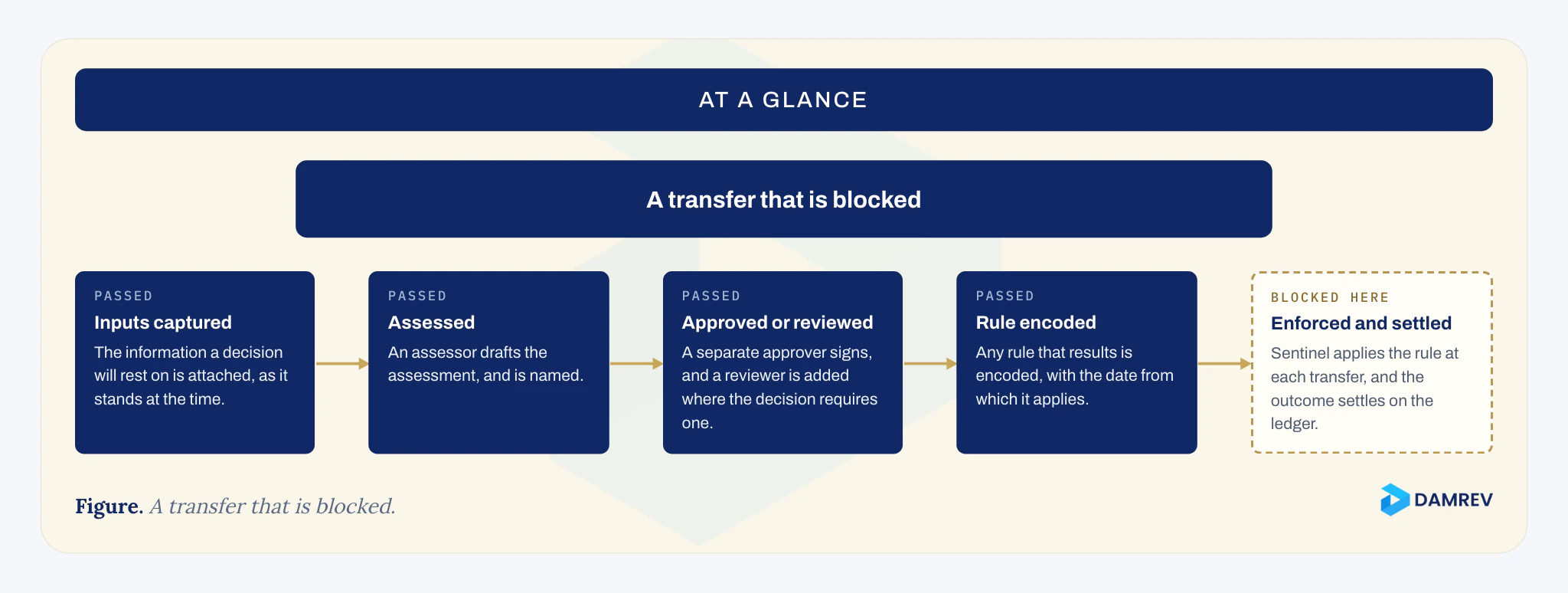
Choose a case and follow one event onto the record.
Evidence
Each kind of entry, what it lets an auditor show, and where it comes from.
01
02
03
04
05
06
07
On request
Name the programme, the period and your role when you ask.
Common questions
Short answers on the record: whether an auditor can trace an on-chain event to its approval, how long the record is kept, whether a decision can be read against the method of its time, and how personal data on the record is protected.
Yes. The operating instrument can always be traced back to the terms that authorised it, because each rule is recorded with the decision, inputs and approvals behind it.
For the life of the instrument. DAMREV services the instrument for life, and each servicing event joins the same record.
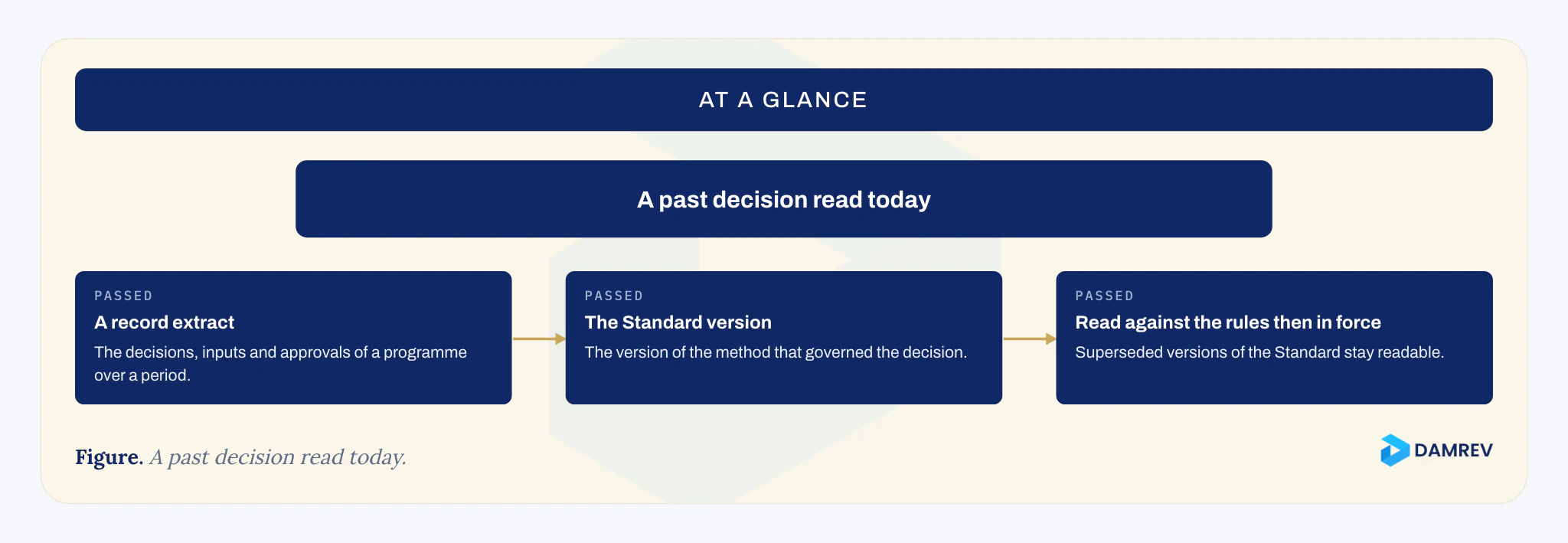
Yes. The DAMREV Standard is versioned, every release is dated, and superseded versions stay readable, so a past decision is read against the version then in force.
Under the privacy policy: it is processed for stated purposes and legal bases, shared only with named categories of processor and with authorities where the law requires, and kept only as long as needed.
Where next
The pages below pick up where this one ends. Start with the one closest to where your asset or programme stands today.
Last updated:
Insights

Since 17 September 2026 a tokenized securities venue may run automated liquidity pools in tokenized listed stock without registering as an exchange, on conditions.

The GENIUS Act binds payment stablecoin issuers from 18 January 2027, not the firms that hold or settle in stablecoins. Service providers follow in 2028.

The CLARITY Act stalled on a 49 to 50 vote, so tokenized securities stay with the Securities and Exchange Commission, as before.

Guernsey's guidance of 24 July 2026 lets a fund or issuer record and transfer its investments as tokens, under the regimes already applying to it.
Tell us what you want to tokenize.
We will show you how DAMREV can run it.
